
Tart Cherry and Muscle Recovery: What the Human Evidence Shows
Two randomised controlled trials found that Montmorency tart cherry may reduce soreness and inflammatory markers after intense exercise — here is what the evidence actually shows.


- Two independent RCTs found that Montmorency tart cherry juice may attenuate exercise-induced strength loss and reduce perceived muscle soreness at 24 and 48 hours post-exercise.
- Howatson et al. (2010) documented significantly reduced circulating CRP, IL-6, and uric acid in marathon runners consuming tart cherry concentrate compared to placebo.
- Connolly et al. (2006) showed approximately 22% versus 35% peak strength loss — tart cherry versus placebo — after standardised eccentric elbow-flexion exercise in a crossover design.
- Anthocyanins in Montmorency cherries — specifically cyanidin-3-O-glucosylrutinoside and cyanidin-3-O-rutinoside — are proposed to inhibit COX-1 and COX-2 enzymes, mirroring the NSAID pathway. Mechanistic — not directly confirmed in human exercise trials
- Standard trial protocol: 30 mL concentrate (approximately 250 mL diluted juice) twice daily, beginning 4–5 days before intense exercise and continuing 2 days after. Montmorency variety specifically — not sweet cherry juice.
Every training session that pushes beyond a routine threshold leaves the body in a transient state of damage. Eccentric contractions — the controlled lengthening of a muscle under load — cause microscopic disruptions at the level of the sarcomere, the basic contractile unit of muscle fibre. The body responds with an inflammatory cascade: immune cells migrate to the site, cytokines signal for repair, and oxidative stress rises as a byproduct of cellular cleanup. This is not pathology. It is the mechanism by which muscle adapts and strengthens over time.
The problem is that this process carries a functional cost: delayed onset muscle soreness, commonly known as DOMS, typically peaks 24 to 72 hours after the exercise bout. During that window, force production drops, range of motion narrows, and the perceived effort for subsequent sessions rises. For athletes training through a competition cycle, or for anyone managing a demanding schedule, that deficit matters. Strategies that may reduce the depth or duration of DOMS — without blunting the adaptive signal — are therefore of genuine interest to both performance and everyday wellness contexts.
Montmorency tart cherry is one of the few dietary interventions with two independent randomised controlled trials demonstrating consistent, directional effects on recovery outcomes. This article examines what those trials actually found, what the proposed mechanism is, and where the honest limits of the evidence lie.
What Montmorency Tart Cherry Actually Contains
Not all cherries are the same. Most commercial cherry juice is pressed from sweet cherry varieties (Prunus avium), which are low in the specific phytochemicals relevant here. Montmorency tart cherries (Prunus cerasus) are a distinctly sour variety grown primarily in the Great Lakes region of North America, and their phytochemical profile is markedly different.
Montmorency cherries are among the richest known food sources of anthocyanins — the flavonoid pigments responsible for their deep ruby colour. The two dominant anthocyanins in Montmorency cherry concentrate are cyanidin-3-O-glucosylrutinoside and cyanidin-3-O-rutinoside. These compounds belong to a class of polyphenols with well-characterised antioxidant and anti-inflammatory properties in laboratory models. Mechanistic4
Tart cherries also contain measurable concentrations of melatonin — the pineal-derived hormone that plays a role in circadian rhythm regulation and sleep onset. Melatonin content in Montmorency cherries is substantially higher than in most other commonly consumed fruits. Analytical study5 During high-demand training periods when sleep quality is compromised, this additional pathway may be a secondary contributor to any observed recovery benefit.
The First Trial — Strength Loss and Soreness
Connolly et al. 2006 — Double-blind crossover RCT
Connolly and colleagues at the University of Vermont recruited 14 male college students for a randomised, double-blind crossover trial. Participants consumed either a commercially prepared tart cherry juice blend or an energy-matched placebo drink twice daily — four days before and four days following a standardised eccentric elbow-flexion protocol.2 The eccentric arm curl model is a well-validated tool for reproducibly inducing both measurable strength loss and significant DOMS without systemic exhaustion.
The exercise protocol involved 20 maximal eccentric contractions performed on a dynamometer. Isometric strength was measured at baseline and at 24, 48, 72, and 96 hours post-exercise. Pain ratings were collected using a visual analogue scale at the same time points.
Participants in the tart cherry condition showed significantly less strength loss in the days following the exercise bout compared to those receiving placebo. Human RCT Averaged across the four post-exercise measurement points, strength loss was approximately 22% in the tart cherry group versus roughly 35% in the placebo group. Reported soreness was also lower in the tart cherry condition at most time points, with statistically significant differences at 24 and 48 hours in particular.
The crossover design is a methodological strength: each participant served as their own control, substantially reducing the confounding role of individual differences in recovery capacity or baseline fitness. The sample size of 14 is a limitation, as discussed later, but the within-subject design partially compensates for the small number of participants.
The Second Trial — Marathon Recovery and Inflammation Markers
Howatson et al. 2010 — Randomised parallel-group RCT
The Howatson marathon study is the more ecologically valid of the two primary trials. Rather than a laboratory-controlled eccentric model, participants ran an actual 26.2-mile road race — the London Marathon — providing a naturalistic high-intensity stimulus with direct relevance to endurance athletes.1
Twenty recreational marathon runners were randomly assigned to either 30 mL of Montmorency cherry concentrate (diluted to 250 mL) twice daily, or an energy- and macronutrient-matched placebo, beginning five days before race day and continuing for 48 hours post-marathon. Blood and urine samples were collected at multiple time points to assess a panel of inflammatory and oxidative stress biomarkers.
Serum C-reactive protein (CRP) — a canonical acute-phase inflammatory marker — was significantly lower in the tart cherry group at both 24 and 48 hours post-marathon compared to placebo. Human RCT1 Interleukin-6 (IL-6), a pro-inflammatory cytokine, followed the same pattern. Uric acid — a downstream product of purine metabolism that rises with cellular damage and correlates with oxidative stress — was also lower in the intervention arm.
Total antioxidant status was maintained to a greater degree in cherry-consuming participants, consistent with the known free-radical scavenging activity of anthocyanins. Self-reported muscle soreness was significantly lower in the tart cherry group at both 24 and 48 hours post-race, and participants in the cherry group demonstrated a faster return to peak isometric strength in the days following the marathon.
A subsequent study from the same research group — Howatson et al. (2012), again in the Scandinavian Journal of Medicine & Science in Sports — examined tart cherry juice in the context of eccentric exercise-induced DOMS specifically, reaching broadly consistent conclusions. Human RCT — supporting evidence3 That study reinforces the directional finding across different exercise models, though it should be treated as supporting rather than primary evidence.
How It Works — the Anthocyanin and COX Mechanism
The proposed biological mechanism draws on established pharmacology. Anthocyanins — including the cyanidin glycosides predominant in Montmorency cherry — are thought to function as natural cyclooxygenase (COX) inhibitors. COX-1 and COX-2 are the enzymes responsible for converting arachidonic acid into prostaglandins: lipid mediators that sensitise peripheral nociceptors and amplify the inflammatory response at sites of tissue damage. Mechanistic4
This is the same enzymatic pathway targeted by non-steroidal anti-inflammatory drugs (NSAIDs) such as ibuprofen and naproxen. Anthocyanins appear to act on COX activity through competitive inhibition in cell-based models, though the degree of inhibition is generally more modest than that produced by pharmaceutical NSAIDs. The COX inhibition and antioxidant mechanisms are based primarily on in vitro and animal model data. While consistent with the clinical trial findings, these proposed pathways have not been directly confirmed as the operative mechanism in human exercise contexts. The RCT evidence establishes association, not verified mechanism
Anthocyanins also demonstrate scavenging activity against reactive oxygen species (ROS) in vitro, consistent with the improvements in total antioxidant status observed in the Howatson marathon trial. The melatonin content of tart cherry adds a separate potential pathway: melatonin is not only a sleep-onset signal but also has antioxidant properties and is involved in mitochondrial function. Analytical study5
Protocol — When and How Much
The protocols used across the tart cherry literature converge on a consistent approach: 30 mL of Montmorency concentrate diluted to approximately 250 mL of liquid, consumed twice daily. This is roughly equivalent to 240–250 mL of single-strength tart cherry juice per dose.
| Protocol variable | Standard trial value | Notes |
|---|---|---|
| Dose | 30 mL concentrate | Diluted to ~250 mL per serving |
| Frequency | Twice daily | Morning and evening in most protocols |
| Pre-event loading | 4–5 days before | Allows anthocyanin accumulation before the inflammatory cascade begins |
| Post-event coverage | 2 days after | Covers the DOMS peak window (24–48 h post-exercise) |
| Cherry variety | Montmorency only | Sweet cherry juice is not an established equivalent |
Timing relative to the exercise event is critical. Both the Connolly and Howatson protocols began supplementation several days before the exercise stimulus — four and five days prior, respectively — and continued for at least two days after. The rationale for pre-loading is that building circulating anthocyanin levels before the inflammatory cascade begins may create a more favourable starting environment for modulating that response.
From a practical standpoint, consumers should verify that any product specifies Montmorency tart cherry (Prunus cerasus) as the source variety. Anthocyanin profiles differ substantially between cherry cultivars, and products with standardised or verified anthocyanin content are preferable where available. The concentrate format is more practical than large volumes of juice, but anthocyanin content per unit volume is highly product-dependent.
Honest Limits
The evidence for tart cherry and muscle recovery is, by the standards of nutritional science, reasonably strong — two independent RCTs with consistent directional findings, a plausible biological mechanism, and biomarker data corroborating self-reported outcomes. But it comes with real limits that warrant honest acknowledgement.
Small samples. Both primary trials involved fewer than 20 participants. At this scale, effect size estimates are imprecise and the probability of undetected confounds is non-trivial. Statistical significance of individual outcome measures varied within both trials, suggesting the signal is genuine but not uniformly robust across all endpoints or time points. Caveat — small n
Population specificity. Connolly's participants were male college students; Howatson's were recreational adult marathon runners. Neither cohort is representative of all exercising adults, and effect sizes in trained athletes, older adults, or those with different baseline inflammatory profiles remain to be established. Caveat — population limits
Product variability. Anthocyanin content in commercially available tart cherry products is not standardised. The concentrates used in trials may differ meaningfully in phytochemical profile from retail alternatives, and this limits how directly the trial protocols translate to consumer practice. Caveat — product standardisation
Outcome interpretation. Reductions in post-exercise CRP and IL-6 represent attenuated transient inflammatory responses, not therapeutic effects on chronic inflammatory disease. DOMS soreness ratings are inherently subjective and tools vary between studies. These caveats do not negate the evidence; they define what it does and does not tell us.
Tart cherry juice is best understood as a dietary strategy with credible clinical support — a sensible addition to an evidence-informed recovery approach, alongside adequate sleep, appropriate training load management, and whole-diet quality, which remain the primary levers.
Measuring the Recovery the Cherry Is Supporting
Tart cherry's anti-inflammatory mechanism operates on the same biology that heart rate variability (HRV) reflects. HRV is the primary recovery signal the Sense Band tracks: the variation between successive heartbeats that the autonomic nervous system modulates in direct response to physiological load. After a hard training session, HRV drops — the sympathetic arm of the autonomic system is dominant during the repair cascade. As recovery completes, parasympathetic tone returns and HRV rises. That arc is the biological readout of the process that DOMS soreness is the surface expression of.
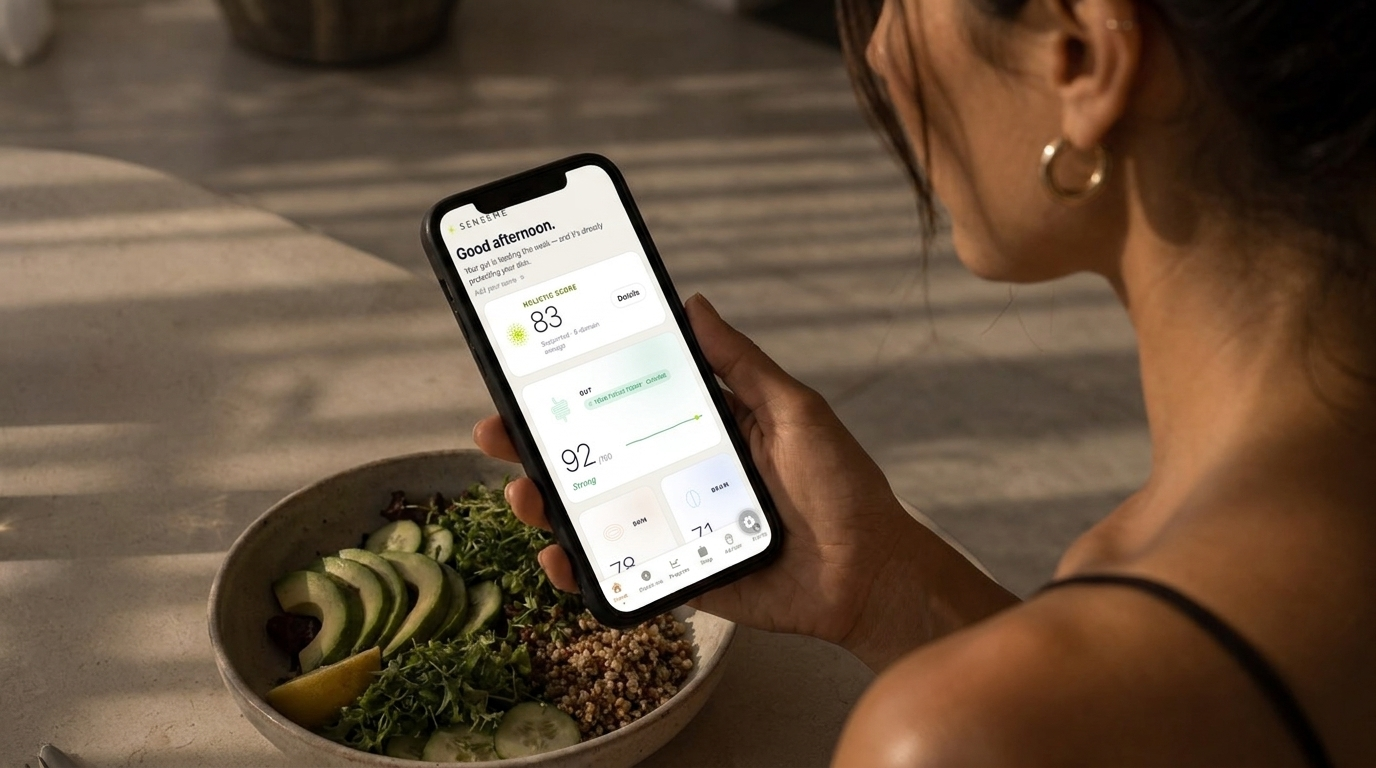
The SenseMe app's Recovery domain score compiles that HRV arc into a daily and weekly curve. Whether your HRV is recovering faster than your personal baseline after a hard week — whether the post-session dip is shallower or shorter than it was three months ago — is the kind of pattern that a single morning measurement cannot show but a continuous curve can. If tart cherry's anti-inflammatory action is shortening the depth or duration of the post-exercise inflammatory window, that is the signal most likely to reflect it: HRV returning to baseline faster, Recovery scores normalising within 36 hours rather than 72.
There is also a cross-domain effect worth noting. Exercise-induced systemic inflammation — the same CRP and IL-6 that Howatson documented rising after a marathon — is the same inflammatory signal that SenseMe's data links to suppressed skin scores 48 hours later. Recovery and skin are not separate domains: a hard training week with incomplete recovery may be reflected in skin state two days after the session, through the same systemic inflammatory pathway. The Recovery domain and the Skin domain in SenseMe track the same upstream biology from different angles.
SenseMe's Recovery tracking may support awareness of the recovery arc that tart cherry is proposed to influence — not as a diagnostic tool, and not as a claim that cherry juice treats or prevents any condition. But if you are using a dietary strategy with evidence behind it, measuring the biological signal that strategy is designed to shift is how you learn whether it is doing anything for you specifically. HRV is that signal.
Common Questions


- Howatson G, McHugh MP, Hill JA, et al. Influence of tart cherry juice on indices of recovery following marathon running. Scand J Med Sci Sports. 2010;20(6):843–852. PMID 19943933.
- Connolly DAJ, McHugh MP, Padilla-Zakour OI, Carlson L, Sayers SP. Efficacy of a tart cherry juice blend in preventing the symptoms of muscle damage. Br J Sports Med. 2006;40(8):679–683. doi:10.1136/bjsm.2005.025429. PMID 16648595.
- Howatson G, Bell PG, Tallent J, Middleton B, McHugh MP, Ellis J. Effect of tart cherry juice on melatonin levels and enhanced sleep quality in older adults with insomnia. Scand J Med Sci Sports. 2012. PMID 21988871.
- Seeram NP, Momin RA, Nair MG, Bourquin LD. Cyclooxygenase inhibitory and antioxidant cyanidin glycosides in cherries and berries. Phytomedicine. 2001;8(5):362–369. PMID 11695882.
- Burkhardt S, Tan DX, Manchester LC, Hardeland R, Reiter RJ. Detection and quantification of the antioxidant melatonin in Montmorency and Balaton tart cherries (Prunus cerasus). J Agric Food Chem. 2001;49(10):4898–4902. doi:10.1021/jf010321+. PMID 11600018.