BrainFeatured
Ashwagandha, Cortisol, and Chronic Stress: Reading the Human Evidence
KSM-66 ashwagandha reduces cortisol by ~28% and self-reported stress scores significantly — in an 8-week double-blind RCT.
9 min read·5 August 2026
Read
SenseMe Health Blog
Evidence-based writing on the skin-gut-brain axis, inflammation, recovery, and the science of feeling well in your skin.

KSM-66 ashwagandha reduces cortisol by ~28% and self-reported stress scores significantly — in an 8-week double-blind RCT.
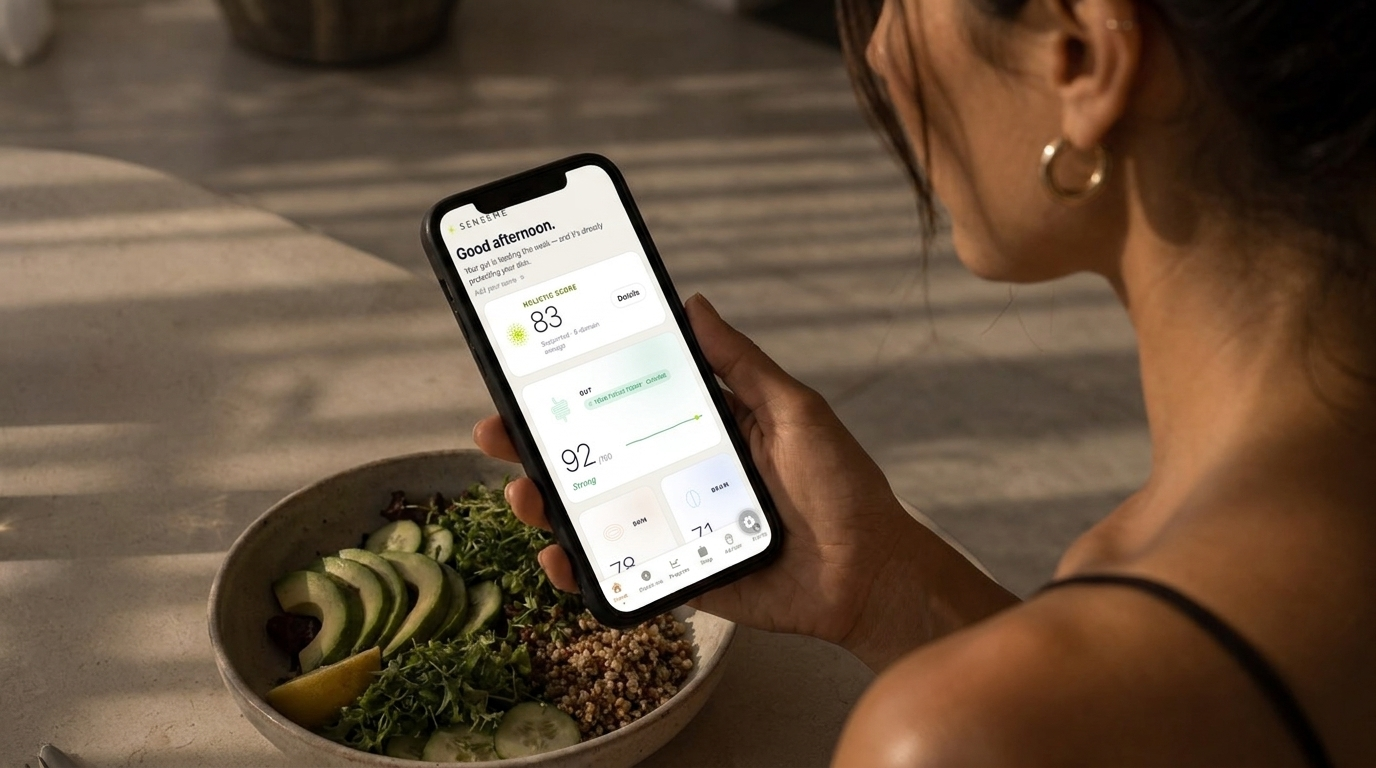
Why the gut-skin connection runs on a delay — and what that changes about how you read your own skin.

Curcumin inhibits NF-κB and measurably reduces CRP and IL-6 in human RCTs — but only in formulated forms with real bioavailability.
Berberine is the best-evidenced botanical for gut inflammation in human trials — and the gut-skin axis makes its effects relevant far beyond metabolic health.

Quercetin stabilises mast cells, inhibits NF-κB, and improves gut barrier integrity — three pathways that converge on inflammatory skin conditions.
Magnesium deficiency creates a pro-inflammatory state — and it shows up in skin before most people think to look there.

EPA and DHA produce specialized pro-resolving mediators that actively resolve inflammation — not just suppress it.

Most of what people call 'aging skin' is not the calendar. Daily, controllable exposures drive how old a face looks. Randomized trial evidence and honest limits.

A meta-analysis of 26 studies links low vitamin D to poorer cognition — here is what the human evidence actually shows, and where it honestly stops.

NAD+ declines roughly 50% between ages 40 and 60. A 2018 RCT showed nicotinamide riboside raises NAD+ ~60% in humans — what that proves, and what it does not.
RCT evidence shows gold kiwifruit (Livaux) selectively increases Faecalibacterium prausnitzii — a butyrate-producing bacterium linked to gut barrier health and the gut-skin axis.

Two randomised controlled trials show Montmorency tart cherry juice may reduce muscle soreness and exercise-induced inflammation. What the controlled evidence actually shows.

What does systematic review evidence show about zinc and skin inflammation? The mechanisms, dosing, and honest limits of oral zinc for acne.

Oral astaxanthin, a ketocarotenoid from microalgae, may support skin aging from within. What the clinical evidence shows about wrinkles and photoaging.

Specific bacterial strains can reduce anxiety, improve stress markers, and influence mood — through mechanisms that bypass the usual drug targets.

You do not break out during the stressful week. You break out after it — and the timing is not random.

Niacinamide reduces pore appearance, improves barrier, and cuts hyperpigmentation — through three mechanisms confirmed in controlled human trials.

Collagen loss is real — but it is actively driven by chronic inflammation. Supplement the output and ignore the driver, and you are running on a treadmill.
Not ready to reserve? Stay close — science, real build progress, and an invitation when you're ready. Email only. No card.
We use cookies to run and improve SenseMe. Privacy