
Niagen (NR) and NAD+: What the Human Evidence Shows About Cellular Energy
A coenzyme found in every living cell declines 50% by age 60 — and one rigorous human trial shows oral NR can raise it back.

- NAD+ is a coenzyme essential to energy production, DNA repair, and longevity-linked sirtuin enzymes — and it declines roughly 50% between ages 40 and 60.
- A 2018 double-blind RCT in Nature Communications found 1000 mg/day of nicotinamide riboside (NR) raised blood NAD+ approximately 60% in middle-aged and older adults over six weeks.
- NR was well-tolerated in the trial with no serious adverse events; a secondary finding showed a trend toward reduced aortic stiffness, a marker of vascular aging.
- Blood NAD+ is a surrogate endpoint — large human trials measuring clinical outcomes such as cognition, muscle function, or health span have not yet been completed.
- Niagen is the branded NR chloride form with the most peer-reviewed human trial support; NR, NMN, and niacin enter the NAD+ biosynthesis pathway at different points and behave differently in practice.
Inside every living cell, a molecule called nicotinamide adenine dinucleotide — NAD+ — sits at the center of an extraordinary amount of biological activity. It is not a vitamin you have likely seen on a nutrition label, yet it is arguably more fundamental to cellular life than most nutrients that appear there. And unlike most of the molecules that sustain us, NAD+ does something almost nothing else does: it declines steadily and substantially as we age, leaving the machinery of cellular energy increasingly short of what it needs.
The research community has paid close attention to this decline — and to what can be done about it. The most clinically studied oral approach is nicotinamide riboside (NR), sold in its most-researched branded form as Niagen. A 2018 randomized controlled trial published in Nature Communications provided the strongest human evidence yet: 1000 mg per day of NR raised blood NAD+ by approximately 60% in middle-aged and older adults over six weeks. Human RCT1 That is a robust signal. The harder question is what it means for health outcomes — and where the science currently draws its own honest boundary.
What NAD+ Does in the Cell
NAD+ functions primarily as a coenzyme — a helper molecule that enables other enzymes to do their jobs. Its most critical role is in the mitochondrial electron transport chain, the process by which cells convert food into adenosine triphosphate (ATP), the chemical currency of energy. Without NAD+, the electron transport chain stalls and cells cannot efficiently generate power. Mechanistic2
Beyond energy metabolism, NAD+ serves two other functions that are increasingly relevant to aging research. First, it is the substrate for PARP enzymes (poly-ADP-ribose polymerases), which detect and repair breaks in the DNA strand. Every time a cell's DNA is damaged — by radiation, oxidative stress, or replication errors — PARP enzymes consume NAD+ to carry out repairs. Second, NAD+ activates a family of proteins called sirtuins, which regulate gene expression, mitochondrial biogenesis, inflammation, and metabolic homeostasis. Mechanistic2,5 Both of these functions connect NAD+ directly to the mechanisms researchers most associate with healthy aging.
The scope of NAD+'s involvement across energy, repair, and longevity pathways explains why the biology of its decline is so consequential — and why the longevity research community has focused considerable attention on whether oral supplementation can meaningfully restore it.
What Happens to NAD+ as We Age
NAD+ levels are not static across a lifetime. Research in animal models and human tissue has consistently shown a progressive decline in NAD+ concentrations with age. In most tissues, NAD+ levels fall approximately 50% between the ages of 40 and 60. The decline continues into older age, leaving elderly individuals with substantially less of the molecule than they had as young adults. Mechanistic — animal and tissue data2
Several mechanisms appear to contribute to this decline. As people age, the body's ability to synthesize NAD+ through the salvage pathway — recycling nicotinamide back into NAD+ — becomes less efficient. At the same time, DNA damage accumulates with age, causing PARP enzymes to consume more NAD+ in repair activity. Inflammation, which also tends to increase with age, activates CD38, a membrane enzyme that degrades NAD+. The result is a supply-demand imbalance that widens as the decades pass. Mechanistic3
What does this mean biologically? Researchers hypothesize — and in animal models have provided substantial evidence — that falling NAD+ impairs mitochondrial function, slows DNA repair, reduces sirtuin activity, and promotes the cellular dysfunction that underlies many aging phenotypes. In rodent studies, restoring NAD+ levels has reversed some of these changes. The critical question for human health is whether NAD+ restoration via oral supplementation can achieve meaningful effects in people. Mechanistic — largely animal model data4
Nicotinamide Riboside — One Pathway to Restoring NAD+
The body synthesizes NAD+ through several routes. One is the de novo pathway starting from the amino acid tryptophan — a lengthy biosynthetic process with multiple enzymatic steps. Another is the Preiss-Handler pathway, which starts from niacin (nicotinic acid, vitamin B3). A third, called the salvage pathway, recycles nicotinamide back into NAD+. Mechanistic3
Nicotinamide riboside enters the pathway at a particularly efficient point. It bypasses a key rate-limiting enzyme called NAMPT that otherwise bottlenecks NAD+ production from nicotinamide, and converts directly to nicotinamide mononucleotide (NMN) before being incorporated into NAD+. This makes NR an orally bioavailable and metabolically efficient precursor. Mechanistic3
NR is a naturally occurring form of vitamin B3, present in small amounts in milk and yeast. Niagen is a branded NR chloride form developed by ChromaDex, distinguished by being the subject of peer-reviewed human clinical trials — a meaningful differentiator in a supplement market where many products lack this foundation. Unlike niacin, which can raise NAD+ but frequently causes uncomfortable skin flushing (a prostaglandin-mediated vasodilation) at effective doses, NR does not produce this side effect, making tolerability a practical advantage for ongoing supplementation. Human evidence1
What the Nature Communications RCT Showed
The landmark study for human evidence on NR is the 2018 randomized controlled trial: Martens CR et al., "Chronic nicotinamide riboside supplementation is well-tolerated and elevates NAD+ in healthy middle-aged and older adults," published in Nature Communications. Human RCT — strong design1
The trial enrolled 24 healthy middle-aged and older adults in a double-blind, crossover design — meaning every participant received both NR and placebo in randomized order, with a washout period between phases. This design controls for individual variation and is methodologically rigorous for a study of this size. Participants received 1000 mg per day of Niagen NR or matched placebo for six weeks per phase.
The primary finding was a clear, statistically significant result: NR supplementation produced approximately a 60% increase in blood NAD+ (measured as the NMN equivalent in whole blood). This was a robust elevation that persisted across the supplementation period. Equally important to the efficacy signal was the safety profile: NR was well-tolerated with no serious adverse events, and the investigators reported an excellent overall safety profile. For a supplement intended to be taken chronically to produce sustained effects, tolerability is not a secondary concern — it is central to whether the intervention is viable at all.
A secondary finding drew additional attention from cardiovascular researchers: participants showed a trend toward reduced aortic stiffness, measured as a reduction in systolic blood pressure. Aortic stiffness is an established marker of vascular aging and an independent predictor of cardiovascular events. The finding was directionally promising but did not reach the threshold for a definitive conclusion in a study this size. Human RCT, trend only — requires replication1
The trial measured blood NAD+ levels — a reliable and accepted surrogate endpoint, not a clinical outcome. Elevated blood NAD+ is a meaningful biological signal, but it does not by itself prove that supplementation reduces biological aging, improves cognition, extends health span, or prevents disease. Large, long-duration human RCTs measuring these clinical endpoints have not yet been completed. The science is compelling and biologically coherent, but extrapolating from a surrogate metabolite endpoint to clinical health outcomes is an inference, not an established causal chain. Evidence limit — surrogate endpoint only; clinical outcome trials pending
The Sirtuin Connection
One of the most scientifically interesting threads connecting NAD+ to aging is the sirtuin pathway. Sirtuins (SIRT1 through SIRT7 in humans) are a family of NAD+-dependent enzymes that function as deacetylases — they remove acetyl groups from proteins, modifying protein activity and gene expression across a remarkable range of biological contexts. Mechanistic5
SIRT1, the best-studied member, regulates mitochondrial biogenesis through its activation of PGC-1α — a master transcriptional coactivator that drives the production of new mitochondria. It also suppresses inflammatory pathways (via NF-κB), promotes DNA repair, and modulates metabolic responses to nutrient availability. In animal models, elevated SIRT1 activity is associated with extended lifespan and improved metabolic health. Mechanistic — largely animal model data5
The critical link to NAD+ is mechanistic: sirtuins are enzymatically inactive without NAD+. When NAD+ falls — as it does with age — sirtuin activity falls proportionally. Researchers hypothesize that this contributes to the reduced mitochondrial function, increased inflammation, and impaired DNA repair characteristic of aging tissues. Restoring NAD+ levels may help support sirtuin activity that the aging process has progressively eroded.
SIRT3, operating specifically in mitochondria, is thought to regulate mitochondrial protein function and antioxidant defenses. SIRT6 plays roles in DNA repair and telomere maintenance. Each member of the family connects NAD+ availability to a different aspect of cellular homeostasis — a network of longevity-relevant biology that depends on adequate NAD+ as its substrate. Mechanistic2,3
What the Evidence Does Not Yet Prove
Intellectual honesty demands a clear account of where the science currently stands and where it does not yet reach.
Blood NAD+ is not clinical outcome data. The Martens RCT demonstrated that NR raises blood NAD+ reliably and safely. It did not demonstrate that this translates to measurable improvements in cognition, muscle function, metabolic health, cardiovascular events, or any other clinical endpoint that matters to a person's lived experience of aging.
Animal model results do not automatically transfer. Much of the most striking NAD+ research — including dramatic reversals of aging phenotypes — was conducted in rodent models. Rodents have different NAD+ biology, shorter lifespans, and respond to interventions in ways that do not always replicate in humans. The mechanistic plausibility built from animal work is genuine and motivating, but it is a foundation for further research, not a substitute for human RCT data on clinical outcomes. Mechanistic — animal model limitation4
The secondary cardiovascular finding requires replication. The trend toward reduced aortic stiffness in the Martens trial is scientifically interesting, but a trend in 24 participants is hypothesis-generating, not definitive. Subsequent, larger, and longer trials are needed before this observation can be considered an established effect.
Optimal dosing and duration remain open questions. The 1000 mg/day dose used in the Martens trial was chosen based on prior tolerability work, but dose-response relationships in diverse populations over months or years are not yet well characterized. It is not known whether lower doses produce clinically meaningful NAD+ elevation, or whether higher doses add benefit without increasing risk.
Long-term safety data is limited. Six weeks of well-tolerated supplementation in a small trial is an encouraging starting point, not a comprehensive long-term safety profile. For a supplement intended for chronic use by aging adults, multi-year safety data in larger populations would be important. Evidence limit — long-term safety not yet characterized in large populations
None of this diminishes the scientific interest of NR research. It means the evidence base is maturing but not yet complete — a common situation in longevity science, where mechanistic understanding often outpaces the large, long clinical trials that take years to conduct.
Who Might Consider NR Supplementation
For individuals interested in supporting healthy aging through evidence-informed choices, NR represents one of the more substantiated options in the longevity supplement space. The core evidence — that oral NR can meaningfully raise blood NAD+ in middle-aged and older adults, safely — is well-supported by the Martens RCT and corroborated by subsequent smaller studies. Human evidence1
People who may have particular reason to consider NR include adults over 40, when NAD+ decline begins to steepen and the gap between biosynthetic capacity and cellular demand widens; individuals with high metabolic or physical demands, since energy production depends heavily on adequate NAD+ availability in mitochondria; and those interested in comprehensive nutritional support for cognitive function and cardiovascular health as they age — understanding that the evidence for these specific outcomes is not yet conclusive in humans.
NR is not a treatment for any disease. It is a nutritional supplement that may support cellular NAD+ levels — a biologically meaningful metric with a plausible connection to healthy aging. Anyone considering NR supplementation, particularly those on medications or managing existing health conditions, should discuss it with a qualified healthcare provider.
Reading the Cellular Energy State Niagen Is Acting On
NAD+ decline is fundamentally a story about cellular energy — about mitochondria producing less ATP, repair enzymes working less efficiently, and the regulatory proteins that govern cellular health losing their substrate. What makes this scientifically important is that these same systems express themselves in signals that can be measured continuously, without a blood draw.
Heart rate variability (HRV) is a proxy for both mitochondrial and autonomic health — two systems that the research on NAD+ and sirtuins directly implicates. The autonomic nervous system is energetically expensive, and its regulation depends on mitochondrial output. When cellular energy capacity declines — as it does with age and NAD+ depletion — HRV tends to fall with it. Continuous HRV monitoring with the Sense Band over weeks and months may surface exactly the kind of slow-moving, biologically meaningful trend that NAD+ supplementation is thought to support. Falling HRV over time can reflect the decline in cellular energy capacity that adequate NAD+ is theorized to address.
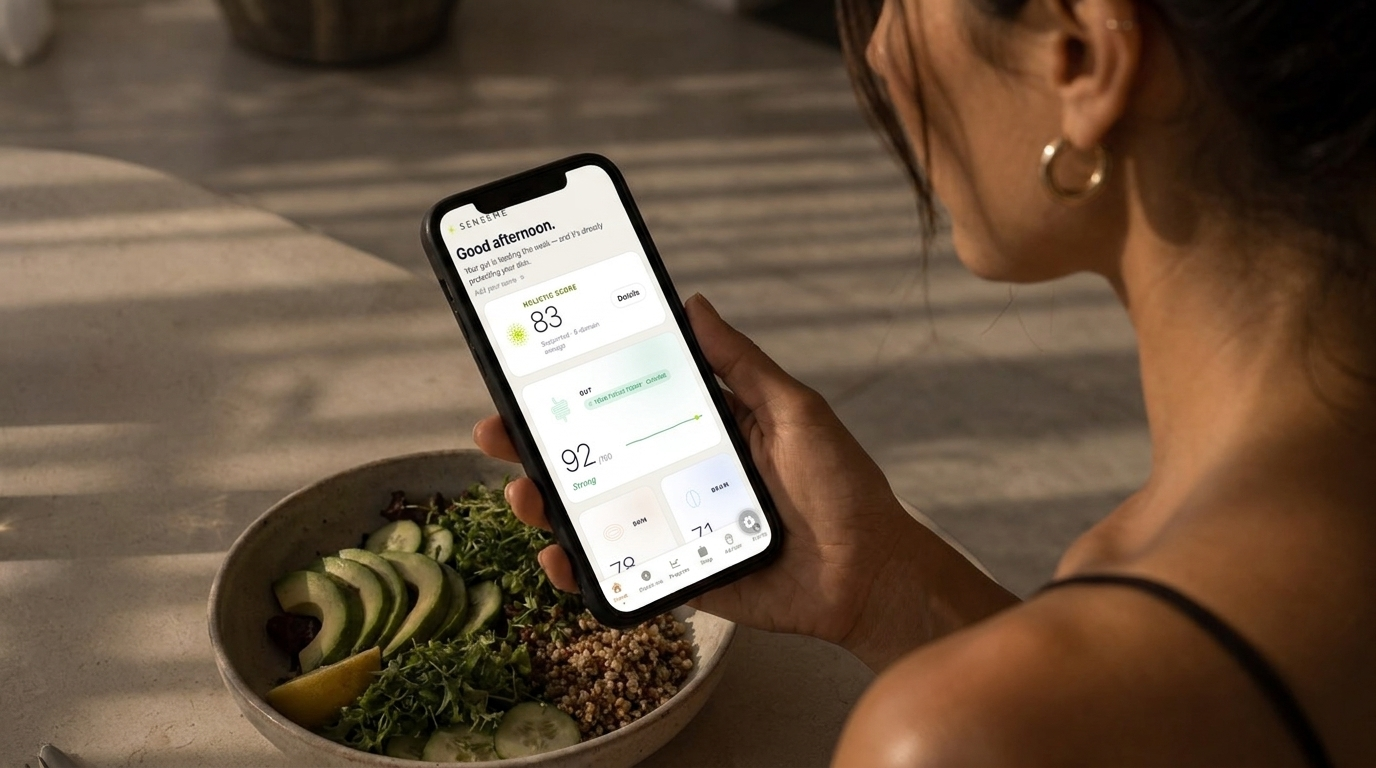
In the SenseMe app, the Longevity domain score tracks the biomarkers that accumulate slowly over time — the ones where a supplement like NR, taken daily over months, would plausibly make its mark. NAD+ is a foundational longevity molecule, and the Longevity score is designed to detect the kind of gradual, multi-system shifts it is linked to supporting. Day-to-day Recovery scores show whether the cellular energy system is responding — whether the autonomic and metabolic machinery that depends on NAD+ availability is working with or against your biology on any given day.
The Sense Band and SenseMe app do not measure NAD+ directly. What they may do is track the downstream expression of cellular energy state over time — making it possible to see whether an intervention like NR is producing a measurable signal in the biology it is intended to support, without waiting years for a clinical trial to tell you what happened. The science warrants the tracking; the tracking can inform the decision.
Common Questions


- Martens CR, Denman BA, Mazzo MR, et al. Chronic nicotinamide riboside supplementation is well-tolerated and elevates NAD+ in healthy middle-aged and older adults. Nat Commun. 2018;9(1):1286. doi:10.1038/s41467-018-03421-7. PMID 29559091.
- Verdin E. NAD+ in aging, metabolism, and neurodegeneration. Science. 2015;350(6265):1208–1213. doi:10.1126/science.aac4854. PMID 26785481.
- Yoshino J, Baur JA, Imai SI. NAD+ intermediates: the biology and therapeutic potential of NMN and NR. Cell Metab. 2018;27(3):513–528. doi:10.1016/j.cmet.2017.11.002. PMID 29275961.
- Chini CCS, Tarrago MG, Chini EN. NAD and the aging process: role in life, death and everything in between. Mol Cell Endocrinol. 2017;455:62–74. doi:10.1016/j.mce.2016.11.003. PMID 27825853.
- Guarente L. Sirtuins, aging, and metabolism. Cold Spring Harb Symp Quant Biol. 2011;76:81–90. doi:10.1101/sqb.2011.76.010629. PMID 22114328.