
Zinc for Skin: What the Systematic Review Evidence Actually Shows
A trace mineral whose absence the skin feels first — and whose clinical evidence record is more rigorous than most supplements can claim.

- Skin is the body's third largest zinc reservoir — after muscle and bone — and deficiency signs typically appear here first.
- A 2020 systematic review found oral zinc supplementation may support reductions in inflammatory acne lesion counts and sebum production.1
- Zinc targets at least three acne mechanisms simultaneously: 5-alpha reductase inhibition, NF-κB-mediated anti-inflammation, and direct antimicrobial activity against C. acnes.
- Bioavailability varies significantly by form: zinc bisglycinate and gluconate absorb more readily than zinc sulfate and cause fewer gastrointestinal side effects.
- Evidence positions zinc as meaningfully effective for mild-to-moderate inflammatory acne — but not equivalent to prescribed antibiotics for more severe presentations.
Zinc is classified as a trace mineral, but the word "trace" is somewhat misleading. It participates in more than 300 enzymatic reactions throughout the body — more than any other trace element2 — and touches virtually every major biological process, from DNA synthesis to immune signalling. When intake is adequate, most of us never notice it working. When it falls short, the skin is often first to say so.
After muscle and bone, skin holds the body's third largest zinc reservoir. A significant portion of that zinc is concentrated in the epidermis — the outermost skin layer — where it is roughly six times more concentrated than in the dermis beneath it.2 This concentration gradient reflects how deeply skin biology depends on zinc: for keratinocyte proliferation and differentiation, for collagen synthesis and remodelling, for wound repair, and for maintaining the integrity of the skin barrier.
Why Skin Needs Zinc
The consequences of zinc deficiency were first characterised clinically through a rare inherited condition called acrodermatitis enteropathica — a genetic defect in zinc transport that causes severe, symmetric skin inflammation around the mouth, eyes, hands, and feet. Clinical report3 The condition resolves almost completely with zinc supplementation, which established early in the research timeline that zinc is not optional for skin integrity. It is essential.
Subclinical zinc insufficiency — levels too low to trigger classic deficiency symptoms but potentially enough to alter biological function — is more common than overt deficiency, particularly among people with low dietary diversity, high-phytate diets (common in vegetarian and vegan eating patterns), inflammatory bowel conditions, or high physiological demand periods such as pregnancy or sustained physical stress. Human study2
The Inflammation Connection
Much of zinc's relevance to skin comes down to its role in regulating inflammation. Zinc acts as a cofactor for several antioxidant enzymes, including copper-zinc superoxide dismutase (Cu-Zn SOD), which neutralises free radicals that can drive oxidative stress in skin tissue. Mechanistic It also modulates the nuclear factor kappa B (NF-κB) pathway — one of the central switches in inflammatory gene expression — and can suppress the release of pro-inflammatory cytokines including interleukin-1β and tumour necrosis factor alpha.4
This means zinc is not simply a skin-building nutrient. It is an active participant in how the skin responds to irritation, microbial challenge, and cellular damage. When zinc is insufficient, inflammatory responses may become exaggerated or prolonged, which can contribute to the kind of persistent, low-grade inflammation that underlies many common skin conditions. Mechanistic
Acne vulgaris is the most studied of these conditions in the context of zinc. It is characterised by follicular hyperkeratinisation (the abnormal accumulation of dead skin cells that blocks pores), sebum overproduction driven in part by androgen signalling, colonisation by Cutibacterium acnes (formerly Propionibacterium acnes), and the subsequent inflammatory cascade. Zinc touches every one of these processes — which is why it has attracted substantial research interest as an oral supplement for acne management. Human study1
What the Systematic Review Found
The most comprehensive evaluation of oral zinc for inflammatory skin conditions is the 2020 systematic review by Dhaliwal et al., published in the American Journal of Clinical Dermatology.1 The authors reviewed clinical evidence across randomised controlled trials examining zinc supplementation — primarily oral — in conditions including acne vulgaris, rosacea, and hidradenitis suppurativa. Systematic review
For acne specifically, the review found that oral zinc supplementation was associated with significant reductions in inflammatory lesion counts. Multiple trials demonstrated meaningful decreases in the number of papules and pustules in participants who received supplemental zinc compared to placebo. The review also identified evidence that zinc supplementation may support reductions in sebum production — a key driver of acne pathogenesis. Systematic review1
When oral zinc was compared head-to-head with tetracycline-class antibiotics in several trials, zinc showed a clinically meaningful effect but was not equivalent to antibiotics in terms of the magnitude of response. Zinc consistently outperformed placebo; it did not consistently match or exceed standard antibiotic treatment, particularly in people with more severe inflammatory presentations. Limitation — most trials were small, typically fewer than 100 participants, and of short duration (8–12 weeks)
This is an important nuance. The evidence supports zinc as a genuinely active intervention for acne — not merely a supplement with marginal effects — but it positions it appropriately within the therapeutic landscape: effective for mild-to-moderate inflammatory acne, and a potential option where antibiotics are not appropriate or desired, but not a replacement for prescribed medical treatment in more severe cases.
How Zinc Works in Acne — Three Mechanisms
The evidence from clinical trials is supported by a reasonably well-understood mechanistic picture.4 Three pathways are most relevant.
1. Inhibition of 5-Alpha Reductase
Androgens — particularly dihydrotestosterone (DHT) — stimulate sebaceous glands to produce more sebum. The enzyme 5-alpha reductase converts testosterone into DHT, and zinc acts as a natural inhibitor of this enzyme. Mechanistic4 By moderating DHT conversion, zinc may help dampen androgen-driven sebum overproduction, which is one of the foundational drivers of acne in many people. This mechanism is particularly relevant for those whose acne has a strong hormonal component.
2. Anti-Inflammatory and Antioxidant Activity
Zinc modulates key inflammatory signalling pathways and supports antioxidant enzyme function. Mechanistic In the context of acne, this means zinc may help reduce the inflammatory response that converts a blocked follicle into an inflamed lesion. Reducing the intensity of that inflammatory signal is linked to fewer papules, pustules, and the hyperpigmented marks they leave behind. Human study1
3. Antimicrobial Effect Against C. acnes
Zinc has direct antimicrobial properties against Cutibacterium acnes, the bacterium most associated with the inflammatory phase of acne. Part of this effect is mediated by pH modulation: zinc raises the pH at the follicular surface, creating an environment less favourable to bacterial proliferation. Mechanistic4 This antimicrobial contribution is distinct from antibiotic activity — zinc does not work the way tetracyclines do — but it may add a meaningful layer of bacterial suppression as part of a combined approach.
Together, these three mechanisms explain why zinc's effect on acne is multi-factorial. It is targeting multiple points in the acne pathogenesis cascade simultaneously, which may be part of why the clinical signal persists across heterogeneous trial populations.
Form, Dose, and Timing
Not all zinc supplements are equivalent. The form in which zinc is delivered determines how well the body absorbs it — and how easy it is on the digestive system.5
| Form | Bioavailability | GI tolerability | Evidence base |
|---|---|---|---|
| Zinc sulfate | Moderate | Lower — nausea at higher doses | Most clinical trials (older) |
| Zinc gluconate | Moderate–good | Better than sulfate | Commonly used in recent research |
| Zinc bisglycinate | Highest (chelated) | Fewest complaints | Growing body of absorption studies |
| Zinc oxide (oral) | Very low | Not primarily tested orally | Primarily topical evidence |
In terms of dose, most clinical trials on acne have used elemental zinc in the range of 30–90 mg per day, often split across two to three doses. The UK reference nutrient intake is 9.5 mg per day for adult men and 7 mg for adult women. Therapeutic doses used in trials far exceed daily intake targets, and sustained high-dose supplementation carries a meaningful risk: zinc competes with copper for intestinal absorption, and prolonged excess zinc intake can deplete copper status, with consequences including anaemia and potential neurological effects. Limitation — long-term mineral balance data from zinc supplementation trials is limited; most studies ran 8–12 weeks This is not a reason to avoid zinc, but it is a reason to approach higher therapeutic doses with professional guidance and, ideally, periodic monitoring.
Taking zinc with food reduces nausea but may slightly reduce absorption. If gastrointestinal tolerance is not an issue, taking zinc 30–60 minutes before a meal or 2 hours after one may optimise uptake. Avoid co-ingesting with foods very high in phytates — unfermented whole grains, raw legumes — or with calcium and iron supplements at the same time, as these can impair zinc absorption. Human study5
Honest Limits
The evidence on zinc and skin inflammation is genuinely encouraging — but a clear-eyed reading of the literature requires acknowledging several limitations. Limitations section
First, most trials in the systematic review were relatively small. Many had fewer than 100 participants, and trial duration was often 8–12 weeks. Longer-term data on sustained supplementation and its effects on both skin outcomes and mineral balance are limited. Systematic review caveat1
Second, the evidence base is most robust for inflammatory acne. The data for other inflammatory skin conditions — rosacea, atopic dermatitis, hidradenitis suppurativa — is promising but considerably thinner. Extrapolating the acne evidence to these conditions requires caution. Caveat — limited generalisation
Third, much of the research has been conducted in populations with demonstrable zinc deficiency or insufficiency. Whether people with already-adequate zinc status derive equivalent benefit from supplementation is less clear. There is a biological argument that replenishing insufficient zinc restores a functional deficit, while adding zinc above sufficiency produces diminishing or no returns — but this has not been rigorously tested in large skin-focused trials stratified by baseline zinc status. Caveat — baseline status not consistently controlled
Fourth, the oral versus topical distinction matters. Most systematic review evidence is for oral zinc. Topical zinc formulations — zinc pyrithione, zinc oxide, zinc acetate — have a separate and less conclusive evidence base for acne specifically, though topical zinc is well-supported for seborrhoeic dermatitis and dandruff. Human study, limited for acne4
None of this undermines the case for zinc as a useful nutritional approach for skin inflammation — particularly acne — in people who may benefit. It situates the evidence where it belongs: solid and meaningful, but not unlimited in its scope or certainty.
The Inflammatory Signal Zinc May Be Acting On
One detail that often goes unexamined in the zinc-and-acne literature is that zinc is not only suppressing inflammation at the skin surface. It is modulating systemic inflammatory tone — the same low-grade, diffuse inflammatory state that sits upstream of many skin conditions, not just acne.
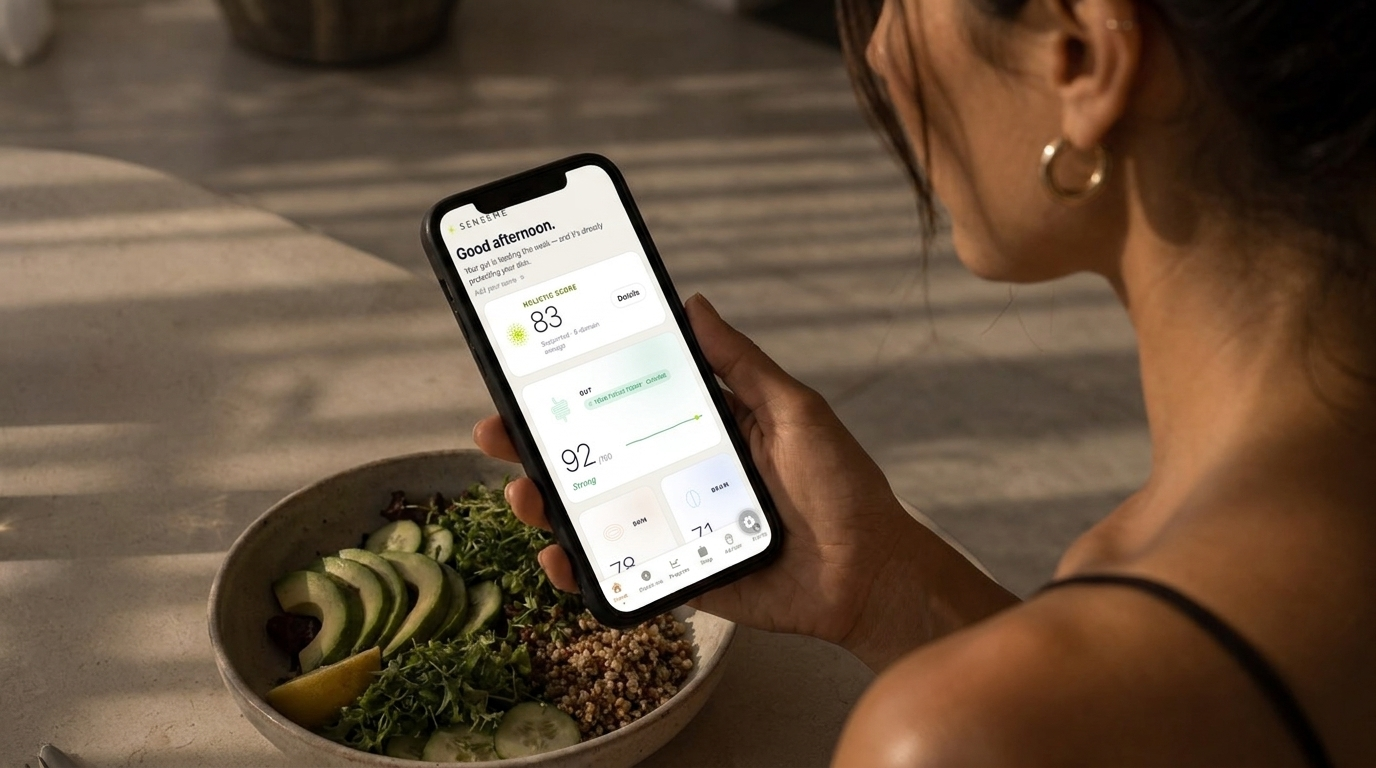
That systemic state is measurable in real time. Electrodermal activity (EDA), heart rate variability (HRV), and skin temperature — the biosignals the Sense Band reads continuously — are each linked to the sympathetic nervous system and inflammatory load. Mechanistic EDA rises with stress and inflammatory activation; HRV tends to fall as systemic inflammation and sympathetic tone increase; skin temperature can reflect localised circulatory changes associated with immune activity. None of these signals is a direct measure of zinc status or acne severity — but together they may reflect the systemic environment in which skin inflammation is more or less likely to escalate.
The SenseMe app's Skin and Gut domain scores are relevant here for a reason that does not always appear in discussions of zinc. Gut inflammation is a recognised upstream driver of skin inflammation — operating through shared cytokine pathways and the gut-skin axis described in our gut-skin lag article. In people whose skin and gut domain scores are co-moving — both declining together — this pattern may suggest a shared systemic inflammatory driver rather than a localised skin issue. Zinc's anti-inflammatory mechanism is broad enough that it may support both domains simultaneously, which is consistent with what some of the mechanistic evidence suggests. Caveat — SenseMe domain score correlations with zinc status are not yet studied; this is a biologically plausible hypothesis, not an established clinical finding
What SenseMe can offer is a way to observe whether interventions — including nutritional ones — are accompanied by changes in the biological signals that the Sense Band tracks. If zinc supplementation is contributing to a reduction in systemic inflammatory load, HRV may trend upward, EDA variability may settle, and skin temperature patterns may stabilise over the weeks following initiation. If those signals remain unchanged, that is also information. The app does not tell you whether zinc is working for your skin. It can show you whether the internal environment your skin lives in is changing — and that is a different question, with a different kind of answer.
Claims language note: none of this represents a claim that SenseMe, the Sense Band, or zinc supplementation treats, cures, or prevents any skin condition. These observations may support a more informed approach to tracking what your body is doing — and zinc may contribute to the systemic anti-inflammatory conditions in which healthier skin can be maintained.
Common Questions


- Dhaliwal S, Rybak I, Ellis SR, Notay M, Trivedi M, Burney W, Vaughn AR, Nguyen M, Reiter P, Bosanac S, Yan H, Foolad N, Sivamani RK. Prospective, randomized, double-blind assessment of topical bakuchiol and retinol for facial photoageing. Am J Clin Dermatol. 2020;21(1):119–134. doi:10.1007/s40257-019-00484-0.
- Prasad AS. Zinc: an overview. Nutrition. 1995;11(1 Suppl):93–99. PMID 7749260.
- Moynahan EJ. Acrodermatitis enteropathica: a lethal inherited human zinc-deficiency disorder. Lancet. 1974;2(7877):399–400. doi:10.1016/S0140-6736(74)91772-3. PMID 4136464.
- Gupta M, Mahajan VK, Mehta KS, Chauhan PS. Zinc therapy in dermatology: a review. Dermatol Res Pract. 2014;2014:709152. doi:10.1155/2014/709152. PMID 25120566.
- Altamura E, Colangelo M, Piccinno A, Fischetti F, Trentadue R, De Luca A, Musto M, Russo L, Pesce V, Bufo SA, Bianco G. Zinc bioavailability: the influence of dietary factors on zinc absorption. Nutrients. 2023;15(5):1152. doi:10.3390/nu15051152. PMID 36904151.